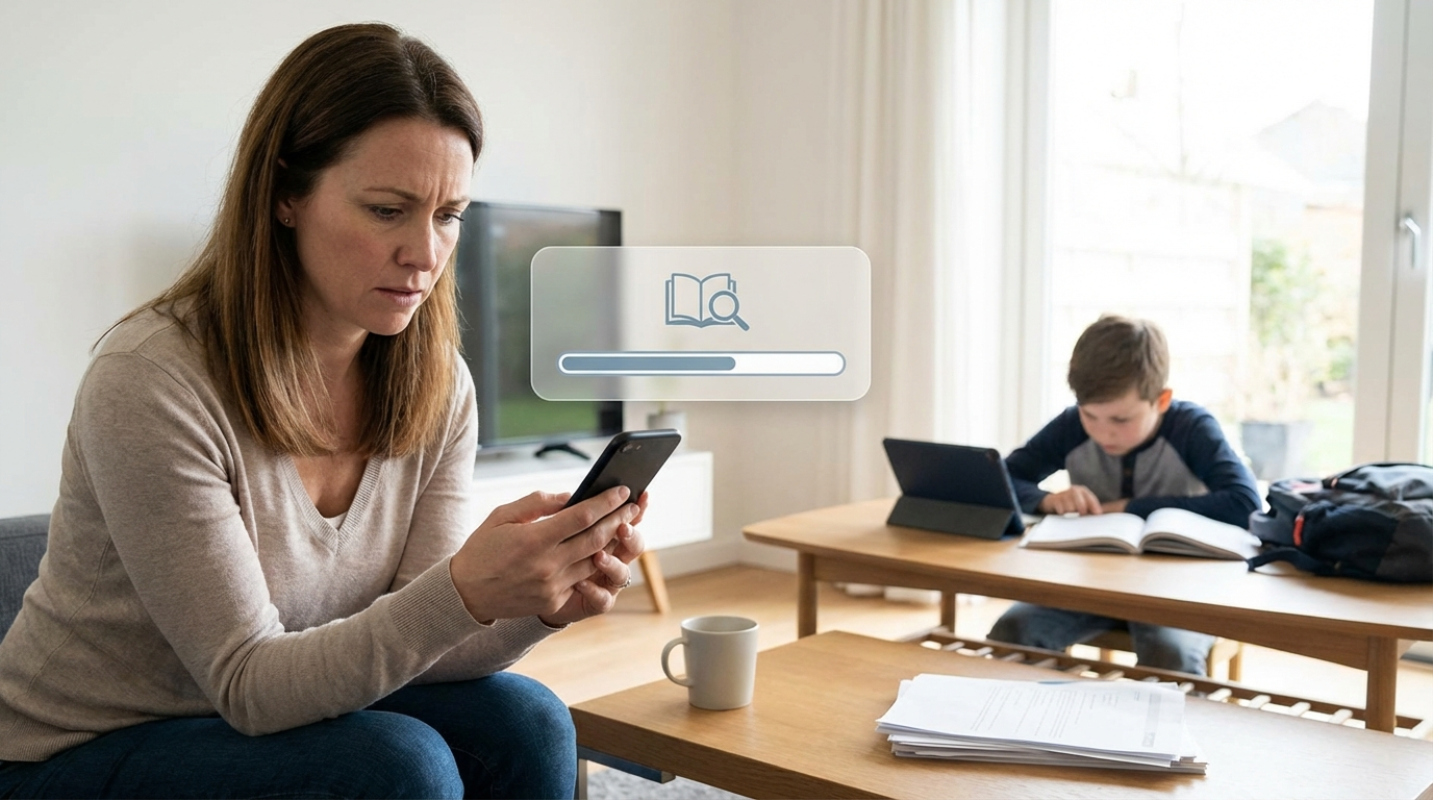
You know that feeling when you are staring at a middle school math worksheet and realize you have forgotten everything since the late nineties? We have all been there. It is that specific brand of panic where you want to help your kid, but the "new math" looks like ancient hieroglyphics. Well, it is 2026, and the apps sitting on your phone are finally doing more than just pinging you about "Spirit Week" or "Nut-Free Cupcakes." They are stepping into the role of a high-tech academic partner.
We are seeing a massive shift in how family communication platforms operate. Apps like ClassDojo and Seesaw are no longer just digital bulletin boards. They have evolved into AI-powered hubs that actually help you monitor homework and understand what is happening in the classroom. This is the new frontier of digital parenting. It is not just about watching what your kids do. It is about having the tools to support them without needing a PhD in every subject.
The Modern Homework Headache
Why is this happening now? Because the "homework headache" has become a full-blown migraine for most families. Between hybrid learning schedules and the fact that assignments are scattered across five different digital portals, parents are drowning in tabs. Have you ever felt like a full-time project manager just trying to figure out if the history essay was actually turned in?
The burden on parents to track multiple platforms is exhausting. AI is stepping in as the organizational tool we desperately needed to restore some balance to family life. By 2025, we saw teacher adoption of AI tools explode by 250 percent. Now, those same tools are being handed to you. These apps act as a digital air traffic controller, pulling data from various sources to give you a clear picture of what is due and where your child might be hitting a wall.
How AI Elevates Parental Oversight
Let's look at what these features actually do. It is pretty impressive stuff. Take the "Homework Helper" feature in ClassDojo. You can snap a photo of a confusing assignment, and the AI (powered by Anthropic’s Claude) breaks it down into "parent-friendly" explanations. It does not just give the answer. It gives you the script to explain the concept to your child.
Then there are the "smart nudges." This is a game changer for the parent-child dynamic. Instead of you being the "nag" who asks "Are you done yet?" for the tenth time, the app handles the friction. It can predict upcoming workload spikes based on the syllabus and send a reminder to your kid (and you) to start early.
Some apps are even using sentiment analysis. They can flag when a student’s messages or work patterns suggest they are getting frustrated or burnt out. It is the digital equivalent of seeing your kid slump their shoulders at the kitchen table, even when you aren't in the room.
Of course, with all this data flying around, privacy is the big question. You should know that the legal space has changed. As of 2025, the FTC updated COPPA rules specifically for AI. Companies now have to get separate, verifiable consent from you before they can use your child’s data to train their algorithms. They also cannot keep that data indefinitely. It is a win for security, but you still have to stay vigilant.
Shifting from Oversight to Partnership
One of the coolest things about this tech is how it changes the vibe at home. When the app handles the administrative tracking (the "did you turn it in?" stuff), you get to be the parent again instead of the taskmaster. This shift helps kids develop their own internal instincts for managing responsibilities.
Experts like Dr. Devorah Heitner have pointed out that constant digital monitoring can be a double-edged sword. If we use AI to track every single move, kids might not learn how to fail and get back up on their own. The goal is to use these apps to build autonomy. You want the technology to provide objective feedback so you can have a conversation about the how rather than just the what.
Educators are even saying that traditional homework is "dead" because AI can produce the "product" so easily. The focus is shifting. Now, it is about the thinking process. Apps like Seesaw are helping with this by using AI to track reading fluency in real-time, saving teachers hours of manual work and giving you a direct look at how your child’s skills are actually progressing.